
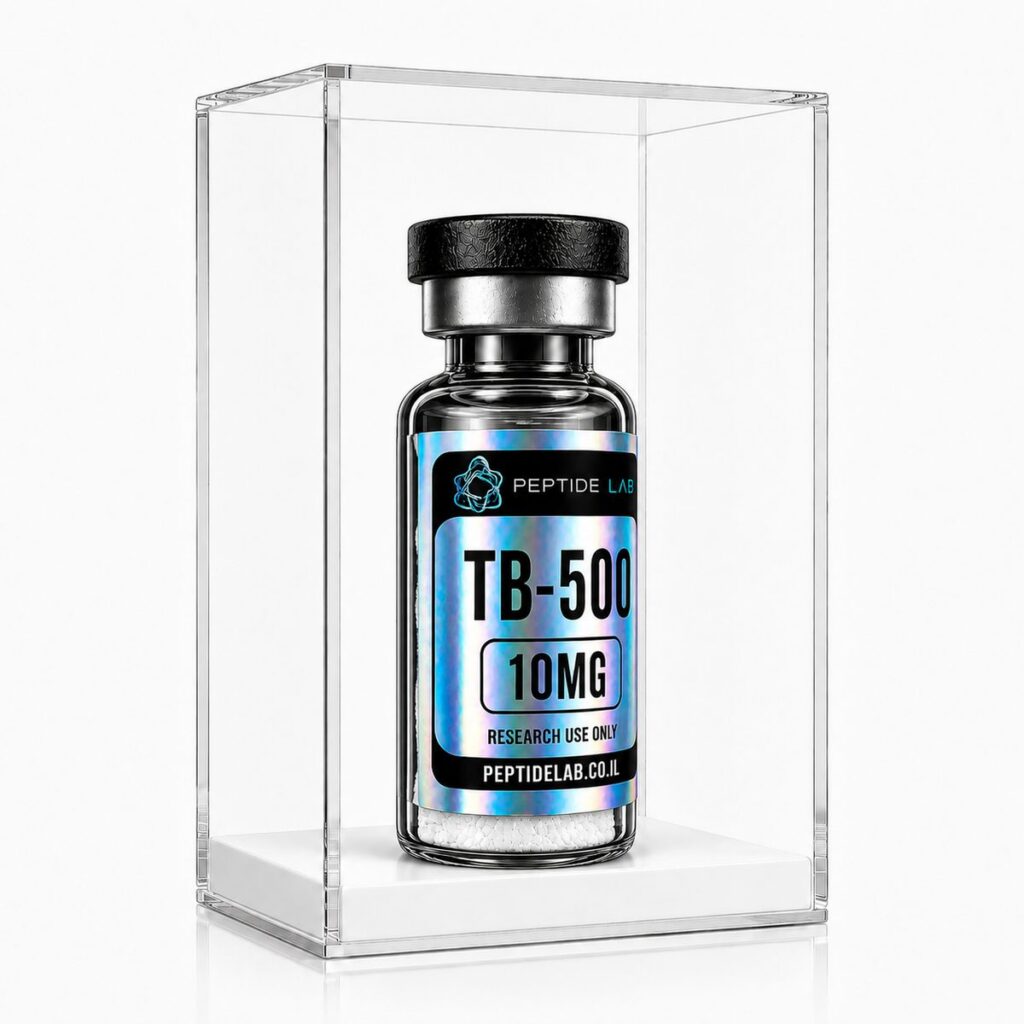
The two most common peptides in the discussion of tissue recovery are BPC-157 andTB-500. They are usually mentioned together — but what is the real difference between them? Let's clarify.
The information in this article is for educational purposes only and does not constitute medical advice. All products on the site are for research use only.
The source is different
BPC-157 is based on a protein sequence from gastric juice, while TB-500 is a version of a fragment of Thymosin Beta-4. That is, these are two molecules with entirely different origins.
The researched mechanism is different
- BPC-157 — is examined in research mainly in a more focused context: tendons, ligaments, and digestive-system health.
- TB-500 — is considered more "systemic," and is examined in the context of cell migration, flexibility, and broad tissue repair.
Why are they researched together?
Because of the complementary mechanisms, many researchers examine them in combination — the logic being that "focused" and "systemic" may cover different angles of the same process. That said, most of the data are still preclinical, and neither is approved for use in humans.
Frequently asked questions
Which of them is "better"?
There is no clear-cut answer — they are researched for different, complementary purposes, and it depends on the research question.
Can they be combined?
In research they are sometimes examined together, but this is a research topic — not a recommendation.
For the research product details: BPC-157 · TB-500. For dilution calculation — the calculator.
Before buying, it's worth going over theA guide to choosing a peptide supplier .
The information is general and for educational purposes only and does not constitute medical advice. The products are for research use only.