Recovery & injury peptides
Peptides studied in the context of tissue healing and recovery — BPC-157, TB-500, and more. For research use only.
Showing all 2 results
-
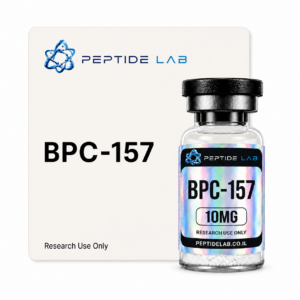
BPC-157
499.00 ₪ לרכישה בוואטסאפ -
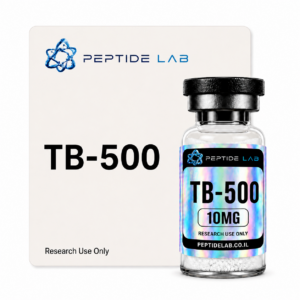
TB-500
499.00 ₪ לרכישה בוואטסאפ
Recovery & injury peptides — what the research explores
A group of peptides is studied in the context of tissue healing, recovery, and the health of joints, tendons, and ligaments. The central idea is that certain peptides may influence pathways involved in the repair and regeneration of connective tissue. One reason for the research interest specifically in tissues such as tendons and ligaments is that they are characterized by limited blood supply and a relatively slow healing rate — and so pathways involved in the formation of new blood vessels and in cell migration to the injured area are studied in this context.
BPC-157 ו-TB-500
BPC-157 is a peptide derived from a protective protein found in the stomach, and it has been studied in the context of healing processes, angiogenesis (the formation of new blood vessels), and connective-tissue regeneration. TB-500 is related to Thymosin beta-4, a protein involved in cell migration, actin regulation, and repair processes. The two are often discussed together, though their mechanisms differ — which is why some researchers are interested in them separately and not as substitutes for one another.
Combining peptides for recovery
One of the questions studied in this field is whether combining peptides with different mechanisms — for example BPC-157 and TB-500 — is more interesting than either one alone, because they address different aspects of the healing process: the formation of blood vessels, cell migration to the injured area, and the regulation of inflammation. It's important to emphasize that this is an open research question — there is no "approved" protocol, and the evidence is still limited and based mostly on animal models rather than large clinical trials in humans. Any combination should therefore be studied carefully, at precise dosages and with orderly documentation, and with the understanding that results are not guaranteed.
It's important to understand how this field is studied: much of the evidence comes from animal models or from the lab, and less from large clinical trials in humans. The conclusions are therefore still cautious, and it is hard to translate them directly into dosages or protocols. The right approach is to view these peptides as a developing area of research — not a proven solution, and certainly not a substitute for professional rehabilitation or for medical advice in the event of an injury.
In practice, the peptides in this category are widely discussed in the sports and weightlifting community, but it's important to separate research interest from a recommendation or proof of efficacy. A compound studied in the context of healing is not necessarily effective, safe, or suitable for every purpose, and the decision to look deeper should be made with an understanding of the limitations and of the fact that these are research materials. We provide scientific information and sources for every product, so that your familiarity with it is based on data and not on marketing alone.
For general background on proper storage and reconstitution, see the basics guide and our dilution calculator.
Want to know how to buy peptides in Israel properly — purity, COA, and shipping? See the supplier-selection guide.
The information is for educational purposes only. The products are for research use only.