NAD+ has become one of the hottest names in the world of research on cellular energy and longevity. Note — it is not exactly a peptide, but rather a coenzyme. We'll explain what it is and why it is so widely studied.
The information in this article is for educational purposes only and does not constitute medical advice. All products on the site are for research use only.
What is NAD+?
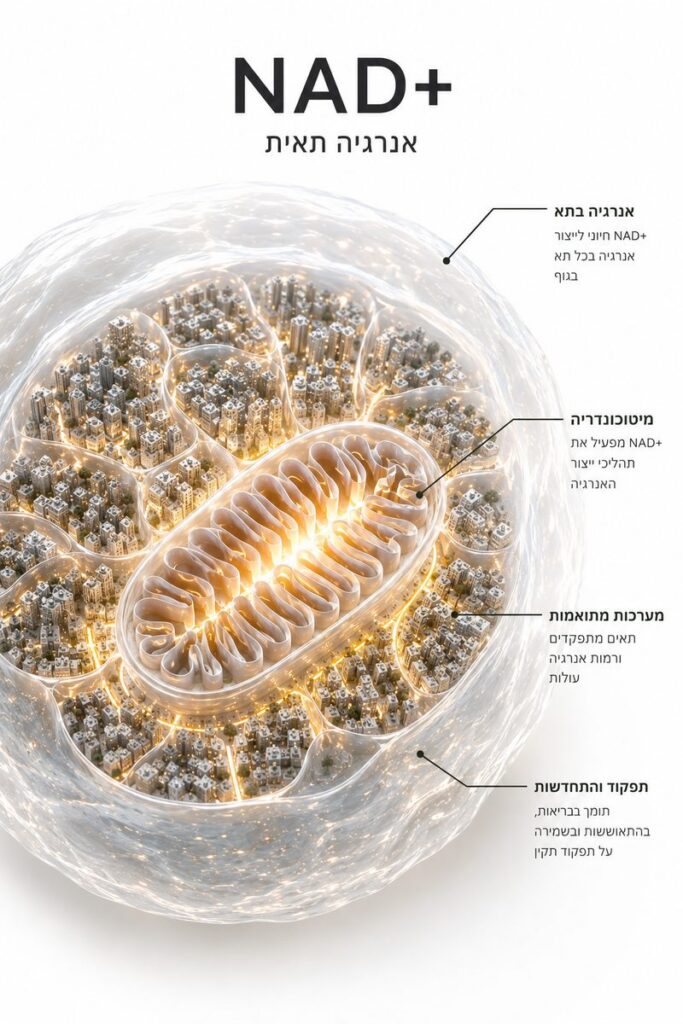
NAD+ (Nicotinamide Adenine Dinucleotide) is a coenzyme found in every cell in the body, and plays a central role in energy metabolism — in "oxidation-reduction" (redox) processes that drive cellular energy production. It is not a peptide, but is sometimes studied in the same context of cellular health.
What does the research examine?
NAD+ levels decline with age, and therefore it has been studied in research on aging, mitochondrial function, and cellular pathways (such as sirtuin enzymes). This is one of the most-discussed areas in longevity research.
Why is everyone talking about it?
The connection between NAD+ and cellular energy and aging processes has made it a popular research topic. That said, it is important to remember that much of the research is still developing, and the product is for research use only.
Frequently asked questions
Is NAD+ a peptide?
No — it is a coenzyme (a nucleotide derivative), but is sold and studied in the broad context of cellular health and longevity.
How is it reconstituted?
From powder, using bacteriostatic water andour dilution calculator.
For the research product details: NAD+. For the general guide — What are peptides.
How do you tell whether a peptide supplier in Israel is reliable? All the signs are in our selection guide.
The information is general and for educational purposes only and does not constitute medical advice. The products are for research use only.